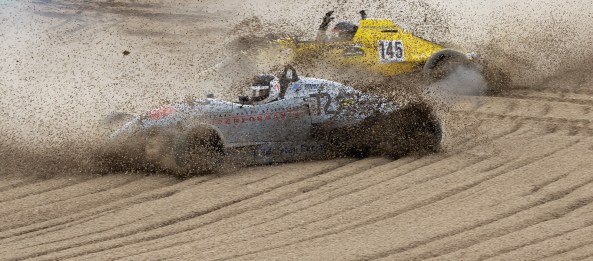
At the end of last month I did something I haven’t done for around a quarter of a century – camera in hand, I stepped ‘over the fence’ to photograph motor racing, standing at the trackside.
Pre-Covid, many of my journalist colleagues were blissfully unaware that the first decade of my career was spent as a photographer, and principally as a motorsport photographer at Brands Hatch. They know now, thanks to lockdown giving me the opportunity to start sorting my extensive and very disorganised photo archive, leading to the launch of Andrew C’s Trackside Archive initially as an Instagram feed, and as I grew more frustrated with Instagram, a Twitter feed – I won’t really be happy until I find time to do the website…
Seeing all my old pics ‘relit the fire’ and I invested four figures in new camera equipment, but of course for many months I had little opportunity to use it thanks to Covid. I really wanted to go to a clubbie, as these were always the most action-packed, enjoyable race meetings, and in October last year I achieved it with a return to Brands – a special place for me, not only because I spent much of the 1980s there but most importantly I also got to know the woman who became my wife there…
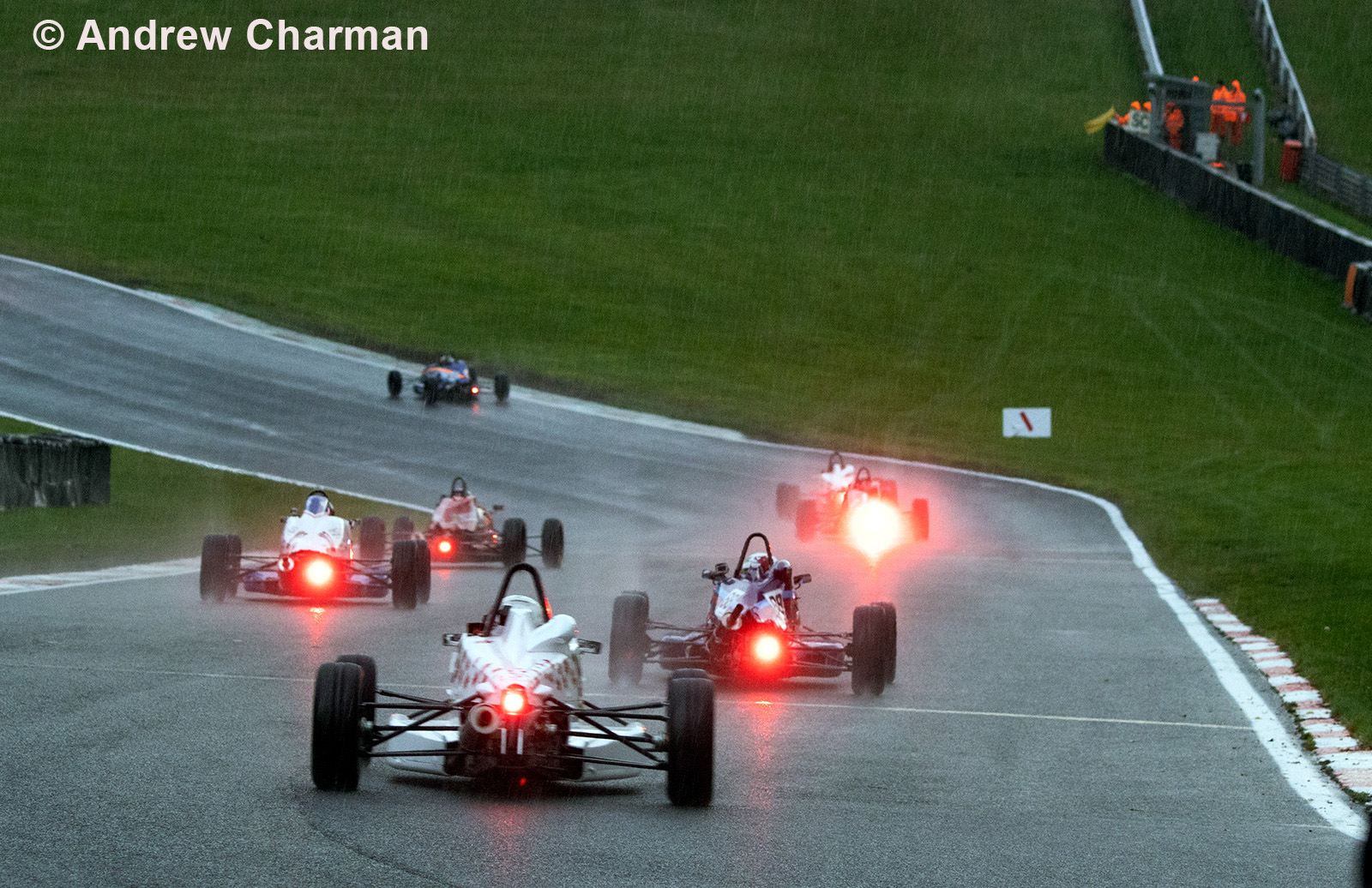
Well it was a sort of clubbie – it was the 50th Anniversary Formula Ford Festival. Once a highlight of my year, I hadn’t done the Festival since around the turn of the millennium, and when I heard that Roberto Moreno was racing, the winner of the first one I was at in 1981, well I had to be there.
Despite being heavily rained upon on the Sunday morning (well what do you expect at Brands in October?) I had a high old time. I didn’t have a press pass and so spent the weekend taking pictures from the public areas, which was a bit of an eye-opener – the move to more safety and consequent spread of high debris fences have made it much more difficult to be a snapper on the public side of the fence, which I hasten to add I completely understand. But had I been a youngster trying to ‘break in’ to motorsport photography right now, I believe l’d find it much harder – many of the angles I used to shoot from are now behind fences.

The most telling comment, however, from that weekend came from a conversation, separated by one of those fences, with the one snapper from ‘my time’ who is still doing the same thing, Gary Hawkins. “What are you doing up there?” he said…
So for this year’s Festival, I had to do it properly – with my £5 million of public liability insurance in place (another understandable requirement that has emerged in my time away) I was set. “Blimey,” said Colin Mann, the same man that I used to sign on in front of in the 1990s, as I walked into the Brands media centre; “It says here you are going trackside…”
First I had to familiarise myself with the ‘Red Zones’ – these are parts of the track where you are no longer allowed to station yourself, again for safety reasons. The very top of Paddock bend for example, where cars are going full pelt at the end of the start-finish straight, and on the outside of the first half of Druids hairpin, looking directly down the track towards Paddock. If cars lose their brakes they’d be coming straight at you through the gravel trap.
It was very different to my day, but in this more safety-conscious time it all made sense – only a couple of weeks earlier a Porsche had ended up hanging off a fence on the inside of Paddock bend, directly over a spot where I regularly took pictures from in the old days…
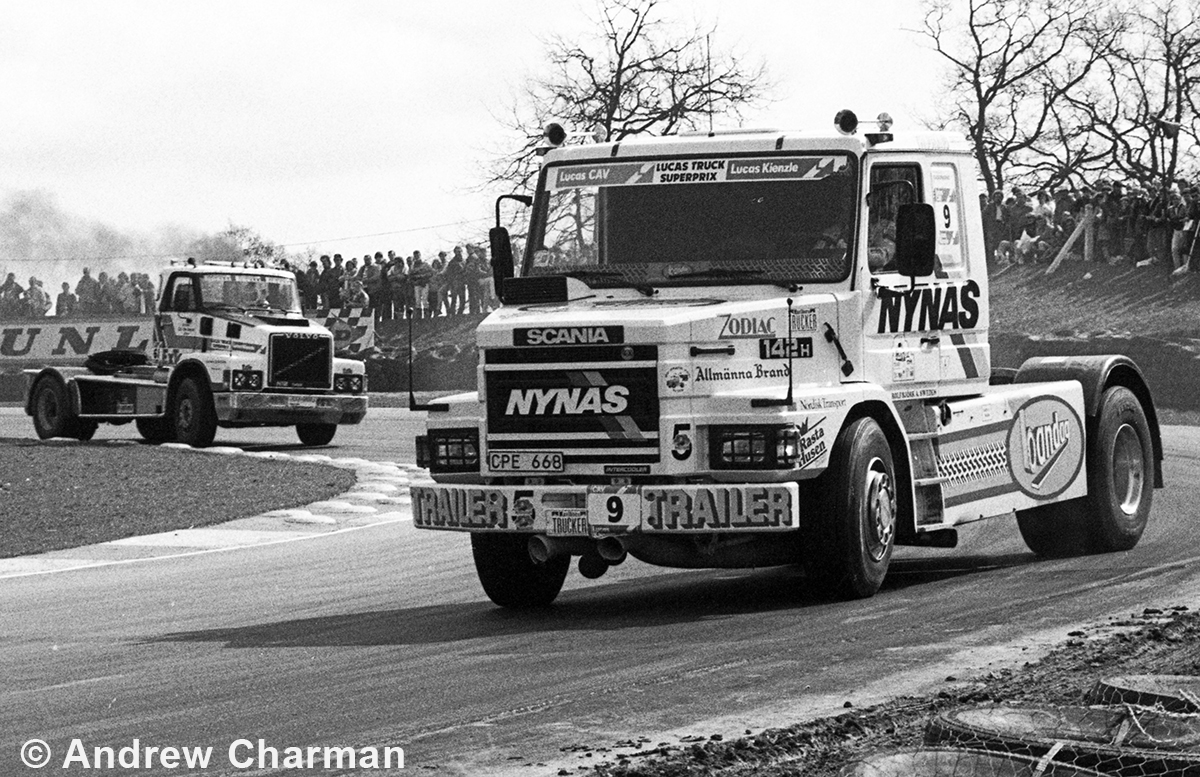
Once I got out there, on the track perimeter that used to be my regular beat, I discovered it’s actually all very different now. You see back in the 1980s we used to stand on the earth banks, above the armco barriers and tyre walls that protected them. And to be honest when I look at some of my pictures from that time I think I must have been nuts! Sitting on the exit of Druids as racing trucks ran out wide exiting the corner – we all know that trucks tend to go through earth banks, not bounce off them…
Now, wherever you go on the circuit with a media pass, you are behind a barrier, rather than above it. In fact you are effectively in a trench, barrier in front, earth bank behind. This is now the norm even on the inside of Paddock, where we used to stand on the old rallycross track with nothing between us and the cars, the concept being that they were far enough away not to target you…

Today the protection is much better, though if you are sensible each time you set up to take pictures you check left and right to ensure there’s nothing to trip over should you need to abandon your spot in a hurry. There’s even a barrier on the inside of Druids, slowest point of the circuit, where I used to stand on the upper of two earth banks – and yes, where a Mini once almost ran over my toes…
There were other things I had to get used to, like what had happened to post 4A? The marshal’s post on the outside at the bottom of Paddock used to be my favourite spot. It’s where I first got to know the marshals, where the observer Dave Barnes first suggested I try and persuade the circuit press office to give me a pass. Once I had one at most meetings I’d nip through the access point by the post to catch up with my friends who formed the regular team on the post – Dave, Nigel Seales, Vic Eacott, Paul Thompson. And of course I got many a good photo from there.
On Festival Saturday when I walked down the spectator bank towards the post, it was nowhere to be seen and there was certainly no access point – the nearest appeared to be up the hill at Druids, the access bearing a plate stating that it was the “Gary Hawkins Gate” – now that’s class. Eventually Gary himself revealed to me that the access to Paddock is right at the top of the corner – you got in via the Ambulance Gate and work your way down an often narrow walkway under towering debris fences. Once I did that I found post 4A, sort of in its old position (well significantly further back from the track than it used to be) and almost swamped by the tyre walls and fencing around it. All very different…
Despite all this, there is only one aspect of the modern Brands Hatch I really don’t like. In the old days if you got it wrong at Paddock, or tried to avoid someone else’s accident, you ran over the kerb and onto a wide tarmac run-off area. After the run-off came the grass and then the tyre barrier. The top half of the bend had extra protection in the form of what when I started was a catch fence and then later a gravel trap.
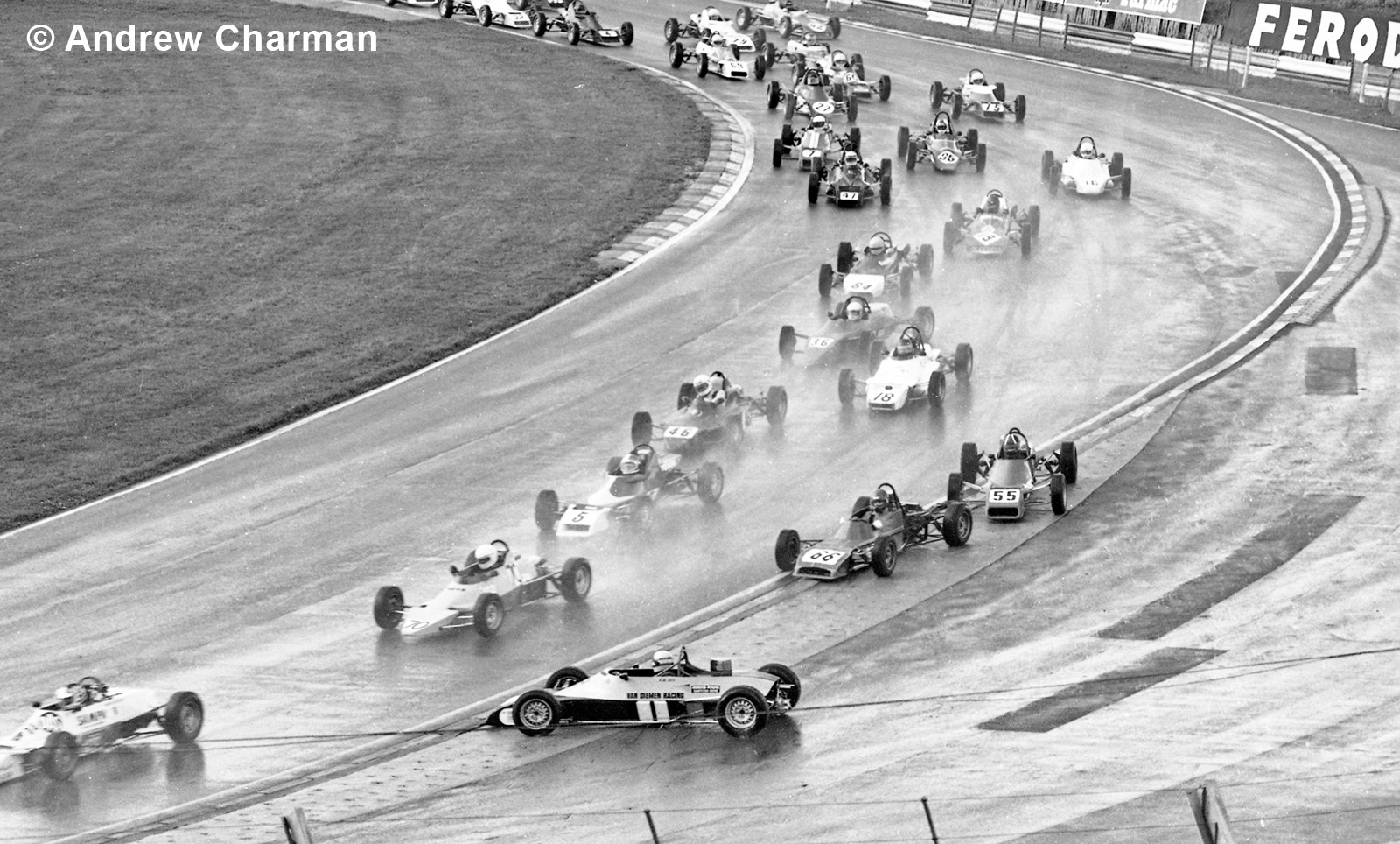
The barrier on the outside of Paddock is now a lot further back than it was in my day, the gravel trap a great deal wider. But it also extends right to the edge of the track itself. In the old days if two cars spun those behind had a chance of avoiding them on the left, running onto the tarmac and losing nothing but a few places. Now a car doing that buries itself in gravel, which means its race is over, a safety car has to be scrambled and everyone loses several racing laps while the errant vehicle is recovered by a snatch vehicle. I’ve seen more than one good race ruined this way.
I think the tarmac run-off should still be there. Okay if cars started using the run-off as part of the main track you could do them with track-limits penalties – something else that is the norm today. But I admit straight away this is just my view – there are people far more qualified than me to decide what’s best in a safety sense.

To be honest I can look back with rose-tinted glasses to the ‘old days’ but some of the things that were the norm then I’d baulk at today, and I did have a couple of close shaves in my trackside years. And the need for those big debris fences was very clearly illustrated on Festival Saturday when driver Matt Rivett did his best to vault them in a barrel-rolling Van Diemen…
Over Festival weekend I soon got back into the swing of things and came away with some photos I was pleased with. I enjoyed going back to my roots, and I’d really like to get back trackside a little more often, if anyone’s looking for a photographer…

 TheShortAxleblog